Our approach to hiring: fewer, better, every time
Published
Three things drive our process.
1. Source like an investor
Our job is to know, personally, who the best engineers, designers, brand marketers, and GTM people in our world are, and to start the conversation before they're looking. Many of those people aren't on the market. We talk to them anyway.
Personally is the operative word. Courting the best people looks like actual courting. By the end of a process, we know our candidates well, and it shows in how we treat them. A candidate who loved gaming got a Serval-branded Chromatic with a working Serval game cartridge inside. When someone mentioned they were feeling under the weather, dinner showed up at their door that night. We host poker nights, sauna sessions at FJORD in Sausalito, and dinner with our cofounders, because deciding where to work is personal too, and we'd rather they know us as people than as a pitch.
2. Make every employee a recruiter
A teammate who worked with someone for two years knows things no interview loop will surface in five hours: how they handle ambiguity, whether they actually ship, what they're like at 11pm before a launch. That density of signal is why referrals work, and why we stack the deck. More than half our team came through them. We ask every new hire who else we should talk to on day one. A referral that gets hired earns you a minimum of $20,000, more for hard-to-fill and senior roles.
The money helps, but people mostly refer because they want great colleagues. We select for that instinct: we hire people who want to be surrounded by people as sharp as they are.
3. Don't compromise
This is the one I've seen violated the most, often by the same people who are loudest about keeping the bar high.
A role sits open, the team is stretched, and a "pretty good" candidate shows up. The temptation to close the gap is enormous.
Every just-okay hire does damage three ways: they take a slot a great person could have filled, they pull the average down and make the next great hire harder to land, and they teach everyone else that the bar is negotiable.
We've left roles open for months rather than fill them with a maybe. Empty seats are temporary. If you keep hiring at the 40th percentile of your team, the talent density collapses without you ever noticing a single bad decision.
Fewer, better. Every time.
You may also be interested in

Sam Stewart joins Serval as Head of Security
Sam Stewart will lead security at Serval as its AI agents take on more of the enterprise's most sensitive work.
Company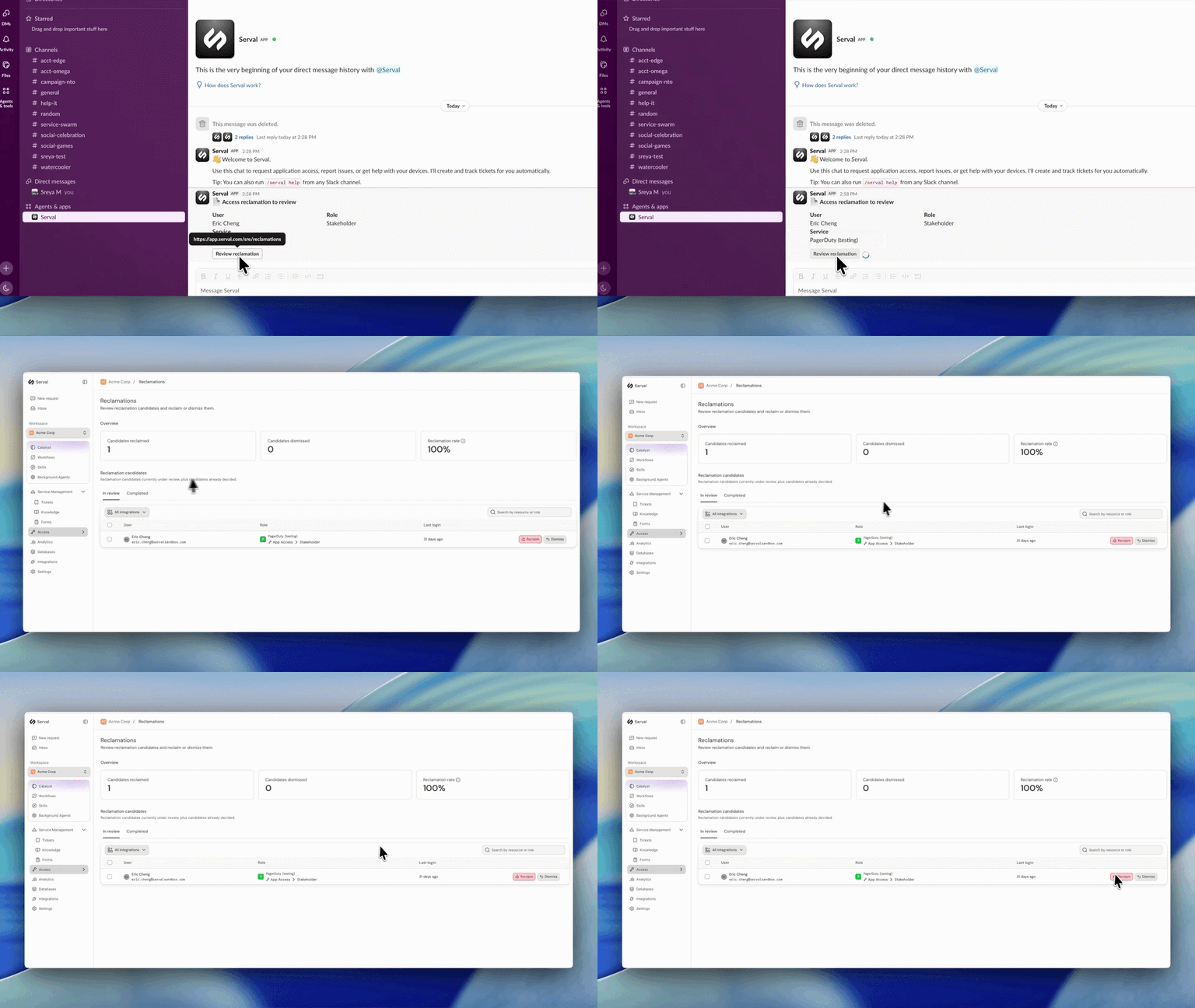
Introducing automated license reclamation
Serval reclaims seats as they go unused, on a policy you set once.
Product
Announcing general availability of Catalyst
Today, we're excited to announce that Catalyst is generally available and will be enabled by default for all organizations.
Product