Why AI-native IT service management is replacing the old playbook
Published
Legacy IT service management (ITSM) is no longer enough for modern enterprise needs. But throwing more labor hours at tickets won’t fix the underlying problem, and basic chatbots only add more friction. AI-native ITSM focuses on workflow automation that actually solves issues rather than rerouting them.
Read on to see how AI-native platforms reshape workflows and help teams automate real work across the enterprise.
The limits of traditional ITSM
Legacy ITSM tools struggle to support today’s distributed teams. In these traditional enterprise systems, the service desk becomes a bottleneck. When an employee needs help, a ticket travels through a slow chain of command while they wait for a response. The system works more like a filing cabinet than a workflow automation engine.
These tools keep teams stuck in a loop of manual data entry and repetitive ticket resolutions. Specific limitations include:
- Manual configuration: Admins handle complex configurations by hand for every new app or team, which drains their time.
- Low automation rates: Engineers waste hours on repetitive work like provisioning access or resetting passwords. These tasks pile up because the system isn’t intelligent enough to handle them in real time.
- Brittle integrations: Most legacy workflows rely on brittle links that break when an API changes. This fragility leads to low automation rates and forces the service desk to resolve issues manually.
Not surprisingly, IT teams often spend more time fixing their ITSM tools than solving actual problems.
AI in IT service management: AI-powered vs. AI-native
AI-powered and AI-native tools differ in their core architecture. AI-powered tools add artificial intelligence as an extra layer on top of old systems, while AI-native tools build that intelligence into the core of the product. Here’s a look at how these two approaches shape modern ITSM.
The limits of AI-powered layers
When tools aren’t native to AI, adding automation often feels like a quick fix bolted onto a broken system. That’s because most legacy companies don’t build their AI in-house. Instead, they buy a separate conversational AI layer and attach it to a platform that was never designed for it. This creates a “front end” that can talk to users but can’t autonomously resolve issues.
AI-powered tools typically produce surface-level chat responses rather than automating workflows. These upgraded legacy tools run on the assumption that simply changing the engine of the platform will speed up solutions. But if the other moving parts don’t change to compensate for a faster engine, its capabilities are wasted. Your workflows remain static and IT workers still need to resolve issues that arise.
The benefits of AI-native systems
In an AI-native IT service management platform, the entire architecture is built around automation from the start. Workflows rely on real code, often written in TypeScript, rather than simple drag-and-drop rules. This ensures predictable execution and strong version control.
A native system changes how teams get work done. Serval uses an agentic design that supports secure and reliable workflow automation. Our platform relies on two specific AI agents:
- Automation Agent: This converts a natural language prompt into a functional workflow. You describe the task in plain English, and the system builds the code.
- Help Desk Agent: This executes workflows within specific guardrails set by your team to ensure safe and consistent service delivery.
These agents work together to turn plain English requests into predictable, automated actions.
What an AI-native ITSM platform actually does
An AI-native platform uses agentic logic to perform tasks that would otherwise require human intervention. Serval helps teams move away from manual ticket queues and toward a system that stays ahead of user needs. Here’s how.
Solving problems through autonomous action
AI-native systems automate the entire lifecycle of a request. Instead of telling an employee how to fix a problem, the platform resolves it across connected enterprise systems using the following features:
- Independent action: The system handles tasks like password resets, account unlocks, and software provisioning without an IT worker intervening.
- Native integration: Serval works directly inside Slack and Microsoft Teams so users get help without switching to a different portal.
- Personalized resolution: The system tracks context across every chat and remembers old issues so that it can provide consistent support.
These features ensure the system resolves issues autonomously instead of escalating them.
Expanding coverage with the Insights Agent
The Insights Agent acts as a partner by looking for patterns in your data. It spots recurring tasks that still rely on manual work and recommends new areas to automate. This creates steady growth as teams adopt each suggestion.
The system creates real results because it constantly finds new ways to resolve issues. For example, Perplexity, the AI answer engine, used Serval to identify high-volume tasks and convert them into automated workflows. It reached an automation rate of over 50% by using these insights to grow over time.
Scaling across the enterprise
While it starts in IT, an AI-native approach quickly spreads to other teams. Serval customers already use these AI agents to manage workflows in HR, finance, and legal departments. Tasks include managing the employee lifecycle and tracking contract approvals. A company can automate its important work using one intelligent platform that works across all departments.
Build once, automate forever with Serval
Traditional ITSM tools track work, while AI-native tools resolve it. Moving to a system built for AI allows your team to manage ticket queues without adding headcount. This upgrade changes how your IT department supports the entire enterprise.
Serval helps teams move fast without the slow setup of legacy tools. Our platform provides a single place to handle ticketing, access, and assets from day one. You can stop the months of manual work and start seeing results in real time:
- End-to-end resolution: Our AI agents resolve requests from start to finish without the need for manual intervention.
- Natural language workflows: Teams build workflows using plain-English prompts to build logic instead of writing code.
- Low overhead: Serval connects to your current tools quickly to reduce the burden on your IT and support teams.
Book a demo to see how Serval can automate your service desk and free your team for higher-value work that drives meaningful impact across the enterprise.
FAQ
How is AI used in ITSM?
Artificial intelligence (AI) automates ticket routing and issue prioritization. Organizations use AI for ITSM to provide self-service in real time. AI-native platforms use natural language to build workflows that handle user requests without the need for human intervention.
What is AI service management?
AI service management is the use of artificial intelligence to handle IT tasks and employee requests. Unlike old tools that only track tickets, AI-native systems automate real solutions, such as resetting passwords.
What are AI managed services?
AI managed services are IT support models that use intelligent software to maintain systems. These services use agentic tools to catch errors and fix them.
What is the best IT service management platform?
The best platforms depend on your goals and specific needs, but modern teams now choose AI service management over legacy tools. While legacy platforms bolt AI on to existing software, AI-native solutions were built specifically for automation and real-time service delivery.
What are the leading AI tools for automating IT?
Leading tools include Serval for agentic automation. Serval is unique because its AI agents run code-based workflows directly inside chat platforms like Slack or Microsoft Teams.
You may also be interested in
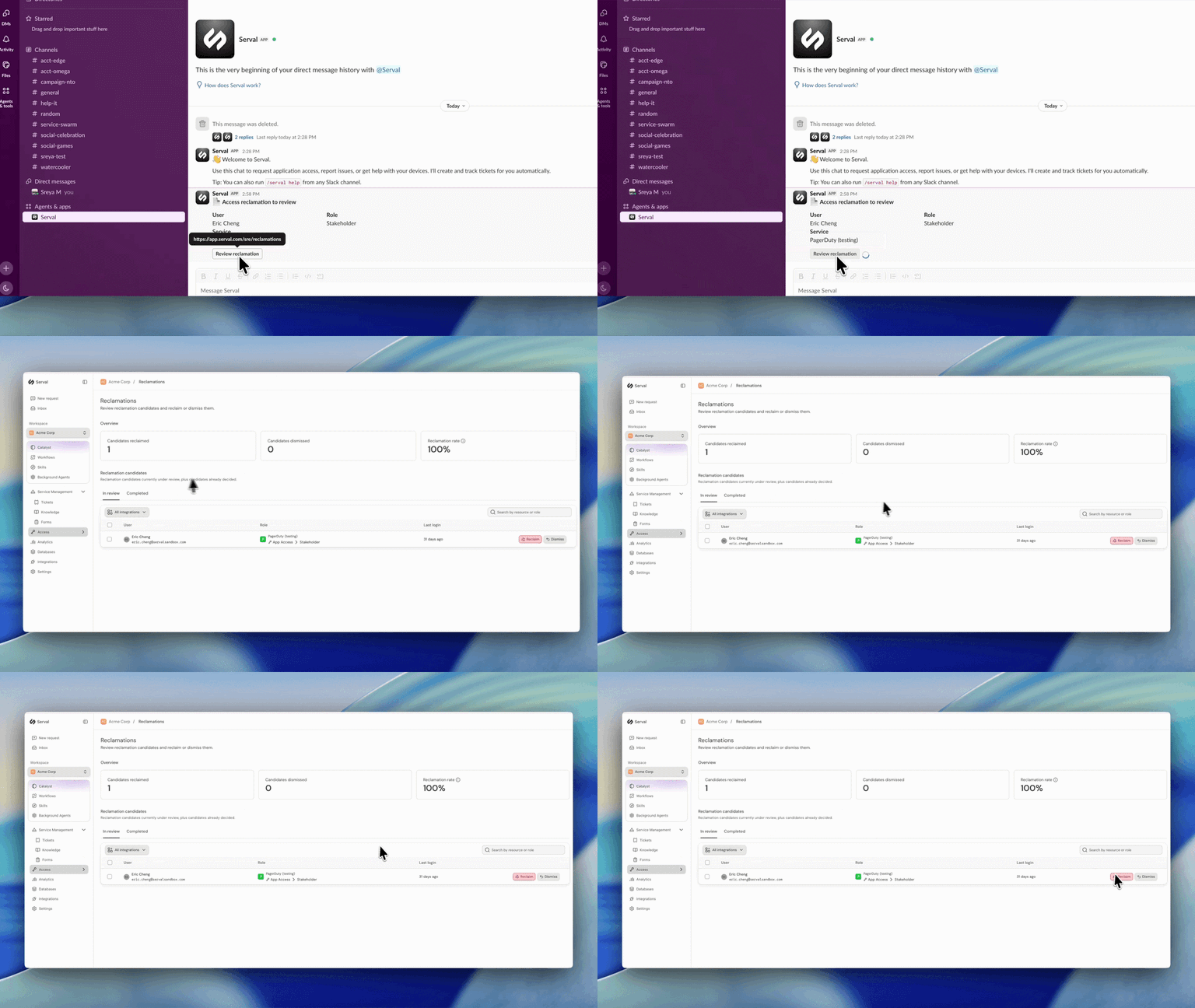
Introducing automated license reclamation
Serval reclaims seats as they go unused, on a policy you set once.
Product
Our approach to hiring: fewer, better, every time
Hiring is the single highest-leverage thing we do at Serval. Every person we bring on either raises the bar or lowers it, so we treat hiring the way we treat…
Company
Serval Launches Program to Transform Employees Into Future Founders
Serval start challenges traditional career paths and retention strategies for startups.
Company